
The Schools of Tippecanoe Part 2: The Castle & Broadway Years
Part 2 of 3
By Mike Jackson
Last week’s article traced the beginning of the Tippecanoe school system with a log school on the west side of Hyattsville in 1832. By 1841, Tippecanoe had grown large enough to need its own school, and its first building was located east of the canal on Main Street.
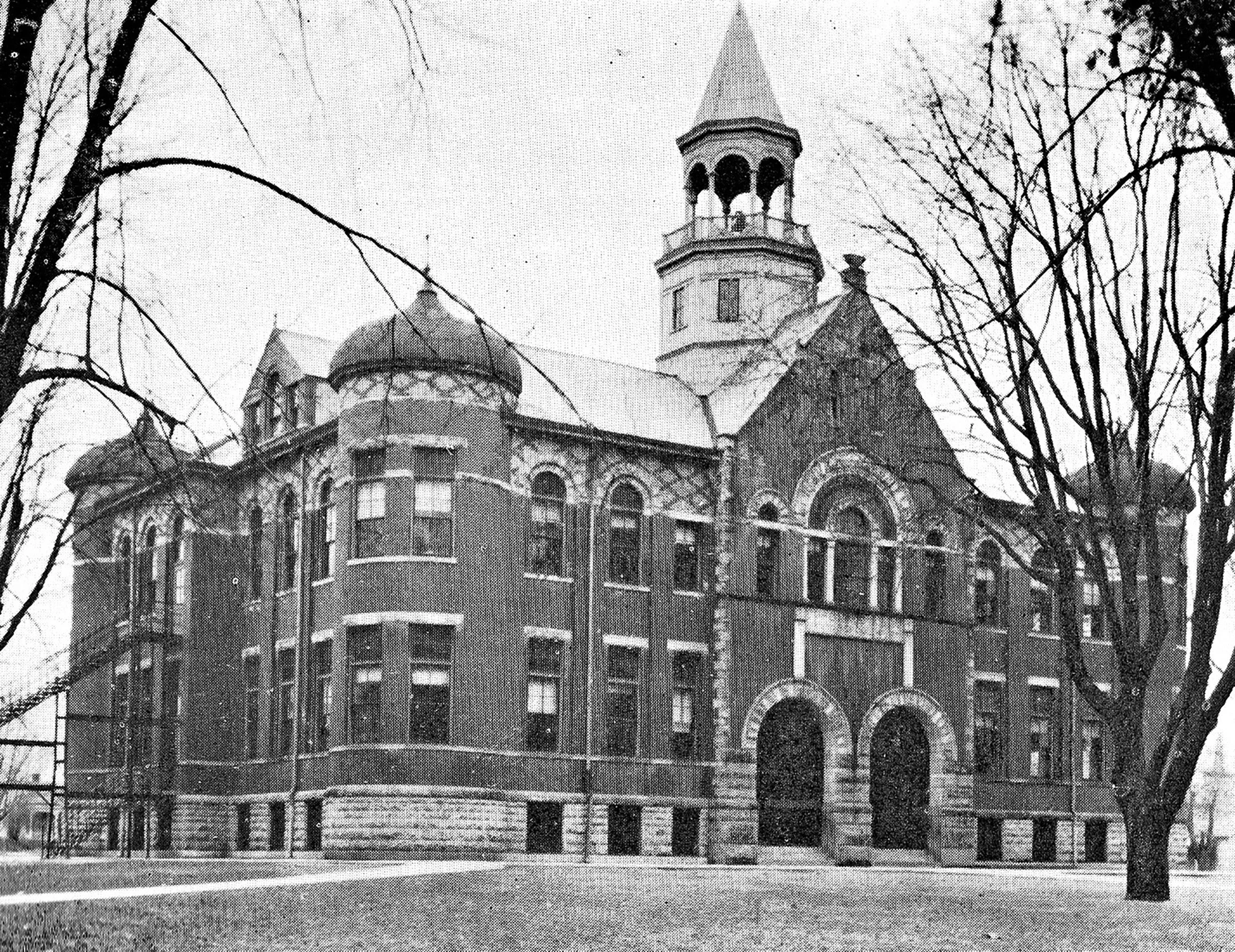
Over the years, school buildings were built on North First Street, and then on Dow Street between Third and Fourth Streets. In 1869, a three-story brick building was built on the current Broadway campus. However, due to poor construction, this structure was condemned less than 25 years later in 1893, and a sturdier replacement was completed in September of 1894. This structure would serve the Tippecanoe school system for about 70 years and, although named Tippecanoe Public School, came to be known and loved as “the Castle.”
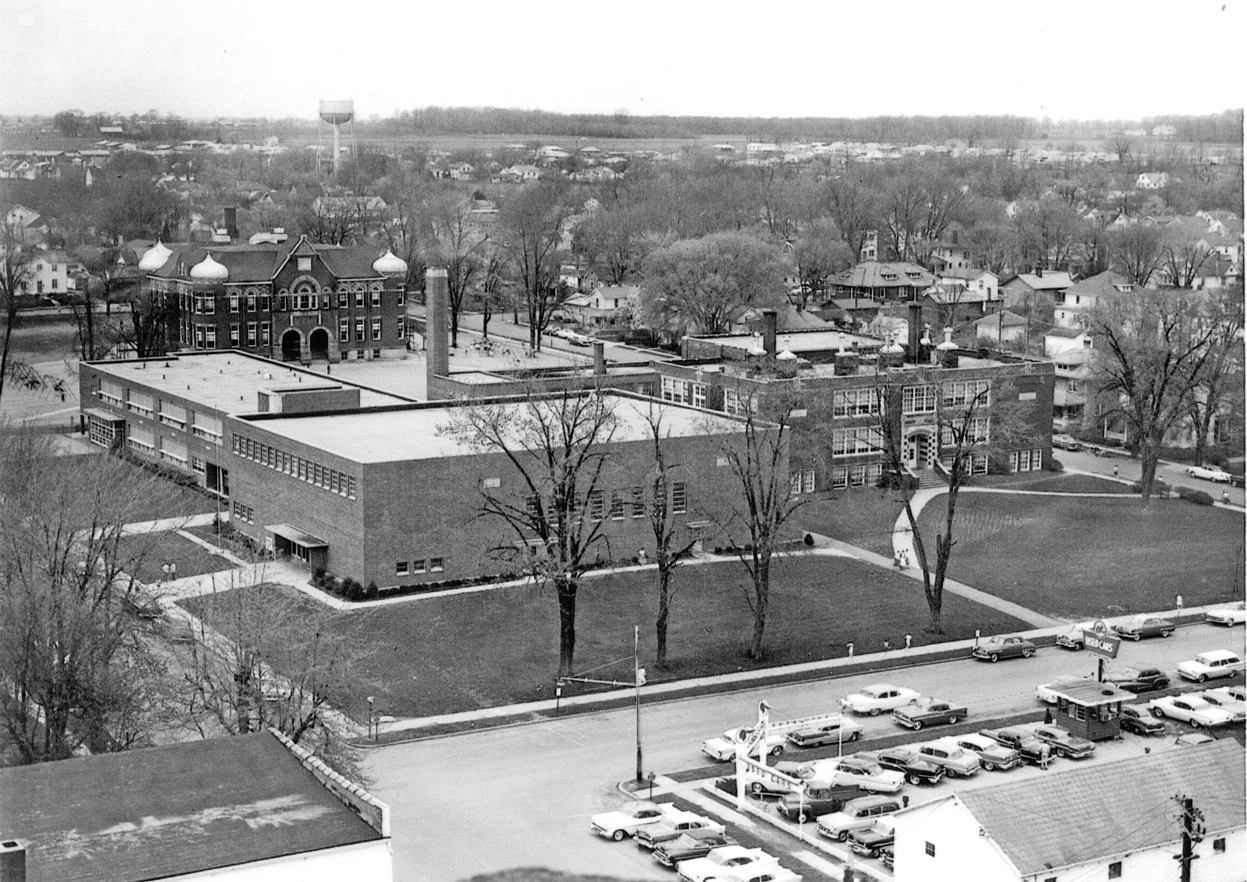
The Castle was built on the same site as the 1869 school, standing where the Broadway playground is now, on the west end of the complex. When opened, it housed the entire school enrollment, grades one through twelve. There were no public kindergarten classes until the early 1950s. On top of the building’s roof stood a prominent bell tower, which was removed many years later.
When this building opened in 1894, it must have seemed like a wonder to the students and citizens of Tippecanoe. Those of us who attended classes in the Castle remember its highly polished wood floors, grandiose wood staircases, and twelve large classrooms with twelve-foot-high ceilings. It truly looked like a castle to us, with turrets on all four corners and spires at the tops.
Memories of the Castle itself are many and, often, humorous. However, three main themes emerge from the input for stories for this article: the floors and two ornate staircases, the fire escapes, and the restrooms. The shiny wooden floors and staircases were continually oiled and polished. Secondly, fire escapes extended from the second floor far into the school yard. These escapes were made of metal, and children’s feet made a lot of noise whenever anyone walked on the escapes – or if some scoundrel rolled a tire down late at night, a popular but frowned upon practice. Finally, the most mentioned memory - the restrooms in the basement. Were the restrooms really haunted? Many students thought they were and were afraid to venture into them alone, lest a creature reach through a vent to scratch an arm or leg. Haunted or not, the smell of the restrooms has been described in many ways, none complimentary.
However the Castle was described, it was a magnificent building, and all who attended classes there into the 1960’s have their own delightful stories to tell. My favorite memories of the Castle involve beginning the first grade in Mrs. Gillam’s class, listening to her read “Ricki Tiki Tavi” from Kipling’s The Jungle Book, and trying to retrieve my boots and gloves from the piles in the monstrous cloakrooms between the classrooms. What a wonderful time to grow up, and what a wonderful building in which to start one’s education.
Tippecanoe continued to grow, and in 1916 another academic structure was built on the Broadway campus. The new building, still standing along Fifth Street and Dow
Street, became the Tippecanoe City High School for grades 9 through 12 and was built at a cost of $47,947. However, the average salary in 1916 was only $708 per year, and a Model T could be purchased for $345.
According to the memoirs of my aunt, Bettie Staup, who lived at 117 South Seventh Street for 69 years, “The school yard around the two buildings was all grass then, with no blacktop, and there were beautiful, big trees all over the grounds. The senior high school was located down a long hill with a wide sidewalk between the two buildings, great for roller skating.”
In 1935, a significant change came to the Tippecanoe school system when the Monroe Township Rural Schools combined with them, creating the Tippecanoe Exempted Village School District. Enrollment, however, remained fairly steady until the early 1950s.
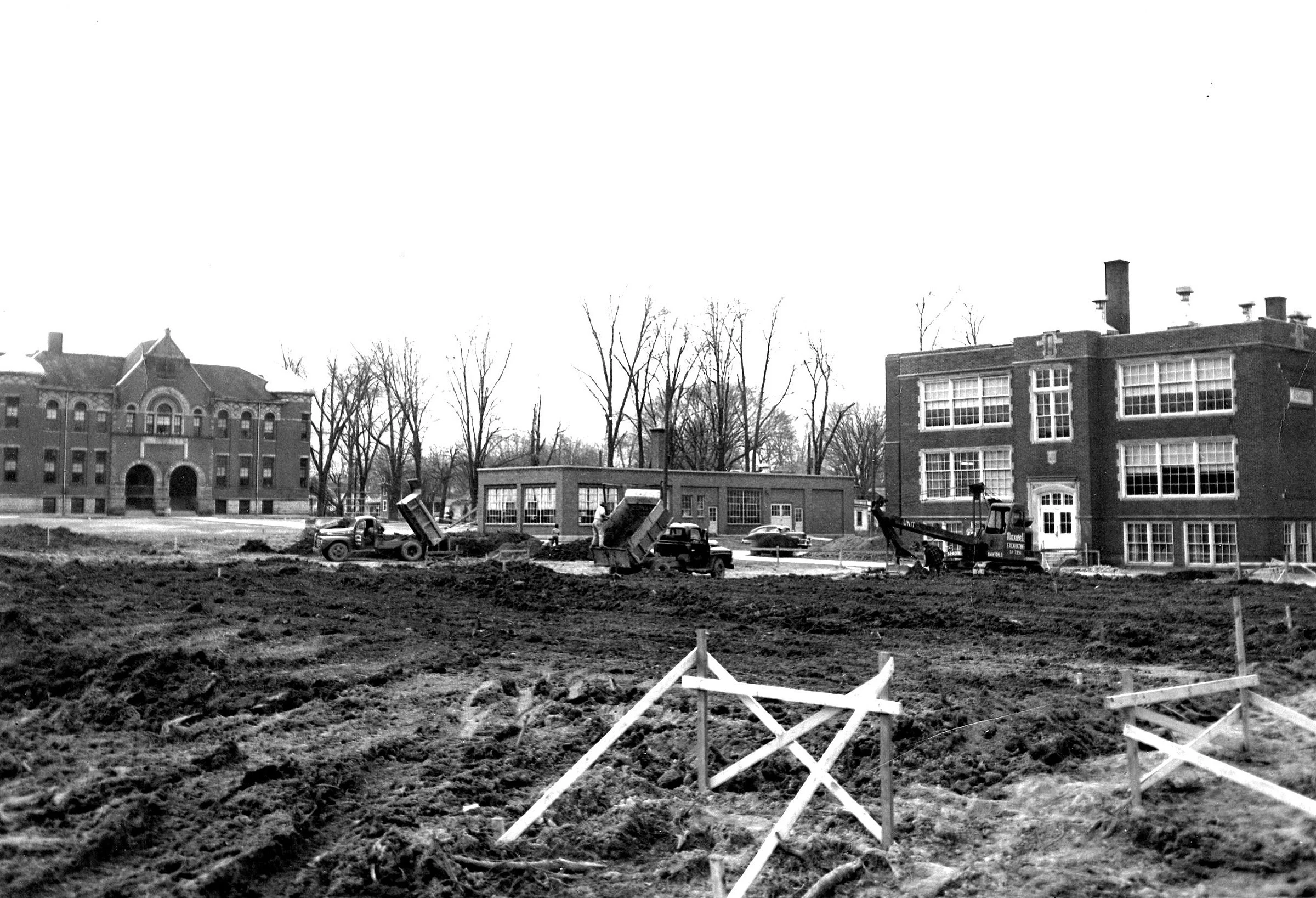
Following World War II, the post-war “Baby Boom” hit the Tippecanoe school system, and more space was needed. In 1953, the first portion of Broadway Elementary opened. Before the move, all of the students in the Castle were used to shuttle schoolbooks from the Castle to the new elementary classrooms and library in the Broadway building, and I began second grade in a brand-new building with brand new desks.
By the early 1960’s, the condition of the Castle had deteriorated to the point where a ceiling light fell onto the desks in a first-grade classroom. Fortunately, and ironically, the students were outside at the time, taking part in one of the frequent fire drills. The possibility of a fire in the highly oiled wooden interior had become a strong concern after fire and smoke mushroomed through the old Holy Angels Catholic School in Chicago on December 1, 1958, trapping and killing 90 children and injuring 100 more, as they tried to flee through the smoky corridors. That building had a design similar to the Castle.
After it was determined that the 70-year-old Castle would cost $350,000 to renovate to meet state inspection standards, and a new addition to Broadway Elementary School would cost $398,000, a bond issue was placed on the ballot in November of 1965 to build the addition. The issue was defeated, 1,194 to 973 votes.
A concerted effort began within the community to try again for the passage of a levy—or for another defeat— the next spring, and citizens lined up on both sides of the issue.
Arguments voiced for building the Broadway addition and tearing down the Castle included the following:
· “The building has been repaired through the years just enough to pass state inspections.”
· “It is a fire trap.”
· “We need to give the students the best education in the best facilities possible.”
· “The Castle is too expensive to maintain solely as a monument to childhood memories.”
The Jaycees, a women’s service organization, held an open house on April 17, 1966. Visitors saw firsthand the peeling paint and wallpaper, broken windows, stones, feathers, and bird droppings littering the facility. On May 6, 1966, the bond issue for the Broadway addition passed, 1,338 to 870, a majority of more than 60%.
The Board of Education almost immediately issued a contract for the demolition of the Castle at a cost of $3,950. Razing began on May 31, 1966, and was completed by August. Several people who requested items from the building were told to contact the owner of the demolition company. The Board of Education requested a few items. Bettie Staup and her husband Clyde retrieved enough bricks to create a patio along the side of their house on Seventh Street. Helen Struewing a teacher there, requested a newel post. Her husband, Paul (a retired assistant superintendent), later donated this to the Tippecanoe Historical Society Museum, where it remains on display. Some of the remaining debris was used as fill for the parking lot north of Park Avenue and east of the football field.
The Broadway addition was completed but the enrollment of young children continued to increase. The Broadway complex had no room for additional construction, so the Board of Education explored other properties to serve the future.
Next week, Tippecanoe Schools Move North
I acknowledge and thank the Tippecanoe Historical Society, the editors of the Sesquicentennial History of Tippecanoe and the Tippecanoe High School yearbooks, the Tipp City Herald, the Tipp City Library, and Tippecanoe schools for some of the information used in this article.
Interested in becoming a Site Sponsor? Your ad will run at the bottom of EVERY NEWS STORY. Click HERE for more details.