
The Schools of Tippecanoe: The Journey to New Buildings
Part 4 of 4
By Karen Jackson
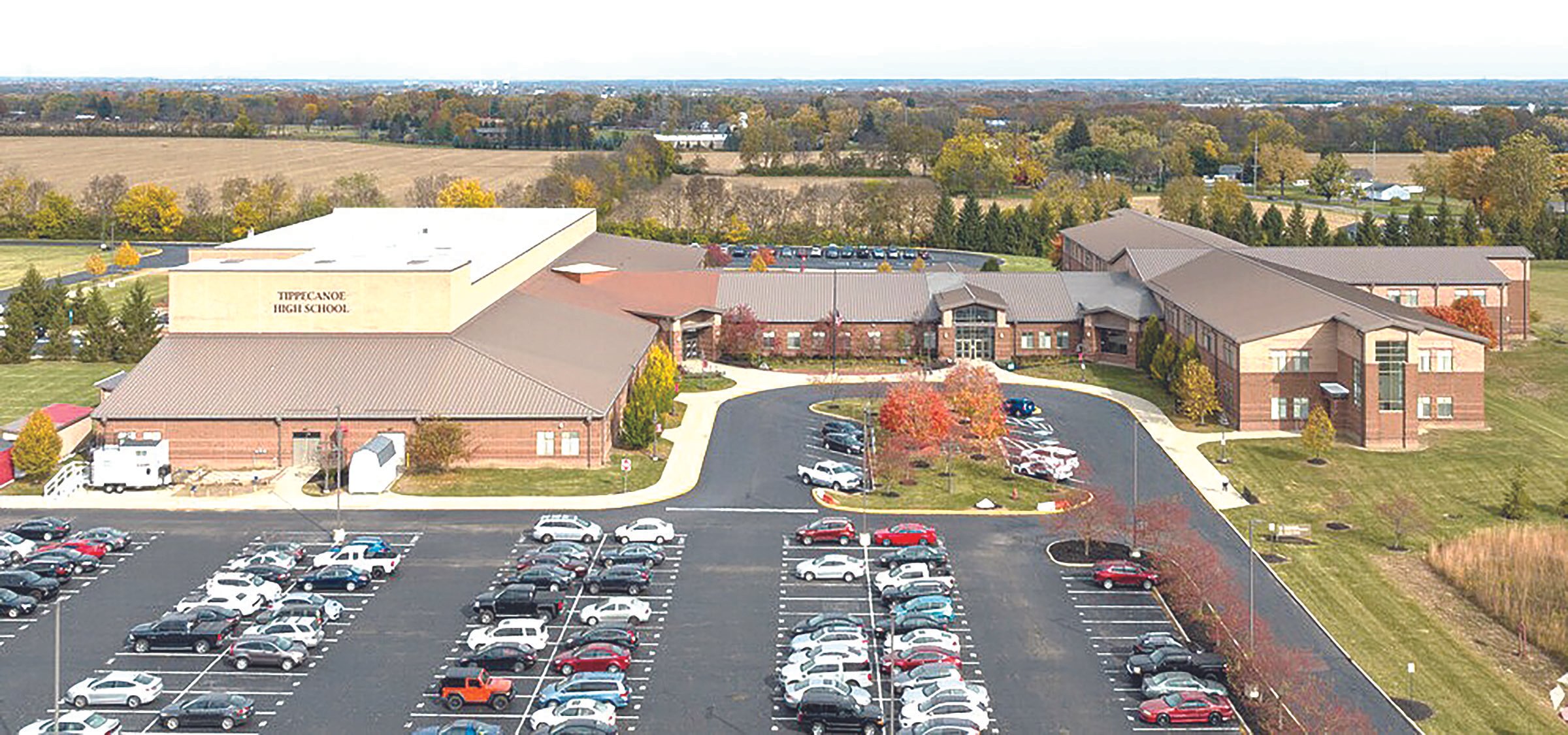
On Sunday, March 21, 2004, a new Tippecanoe High School opened its doors on Kessler-Cowlesville Road, and the gymnasium filled with 2,000 supporters. The dedication program included many thank-you speeches by school administrators and school board members, and entertainment was provided by various school groups. It was a celebration earned following a process that included ten years of work and, often, disappointments.
The effort to build a new high school began in 1994 when the thirty-year-old high school on Hyatt Street was found to be in need of repair and general upkeep caused by a lack of funds, not neglect. A capital improvement levy which failed in November 1993 was placed on the ballot again in April 1994. This time, there was an all-out campaign, and the levy passed with a 71% margin. That helped with the maintenance issues, but it didn’t address the overcrowding in both Nevin Coppock Elementary and the high school.
District administrators looked for any space they could find for additional classroom use. Among the adjustments, unused locker rooms were converted to art rooms, and a teachers’ lunch room became a classroom. Some Nevin Coppock students were moved to Broadway. The next year, those students were returned to Nevin Coppock after trailers were added in September 1997. Eleven high school classes were moved to L.T. Ball, the only building with space.
In October 1997, the district formed a 56-member Community Planning Team to study facilities, demographic trends, and educational needs. In March 1998, the team presented their findings to the Board of Education and developed options to address the overcrowding. The overwhelming conclusion was they needed to build, but where, and how would it be funded?
The Board of Education, in May 1998, proposed a bond issue to build a new high school on the Coppock farm land on Michaels Road near 25A. Due to the growth of housing west of Interstate 75 in the preceding 30 years, it seemed a logical location.
The first bond issue attempt in May 1999 failed by only 38 votes, so the Board of Education decided to try again in November. However, other events entered the picture. On July 7, 1999, Blair Conrad, Dayton International Airport’s Director of Aviation, presented the airport’s expansion plans to the Tipp-Monroe Task Force.
The plans included the expansion of two runways, one the north-south runway to be used only 5% of the time when winds were high, and the construction of a new east-west runway that would route air traffic over parts of Tipp City, all due to the growth of Emery Worldwide package delivery. Citizens were not happy to foresee increased air traffic over their community. A specific concern was the possibility that planes could fly directly over a new high school.
When the bond issue appeared for a second time in November 1999, it failed by 541 votes. Clearly, the community needed to be surveyed. The community responded that they wanted lower costs, and they didn’t like the 25A location. The Board of Education began work on another plan.
The new plan made cuts which reduced the total cost from $26.4 million to $22.6 million and moved the site to farm land on Kessler-Cowlesville Road. This time a bond issue on November 7, 2000, passed. Kitty Lobo, the district communications director at the time, said, “Tipp City wants you to prove why you want it. Once you do, they support it all the way.”
The new high school was designed with a focus on economy and efficiency with a classroom capacity of 1,200 students. It included larger classrooms, more storage space, an open commons area, a performing arts auditorium, and a 2,000-seat gymnasium. Site work began, and construction was completed in March 2004.
By the way, the airport’s runways were never expanded.
The construction of a new high school enabled the district to reorganize the other four buildings. In the fall of 2004, sixth, seventh, and eighth grades were moved into the former high school which was renamed Tippecanoe Middle School. Grades four and five were moved into the junior high building, now renamed L.T. Ball Intermediate School. Broadway and Nevin Coppock continued as elementary schools but now served grades K-3. Space issues were resolved, but the deteriorating condition of the 1953 and 1958 elementary buildings was not. Now what?
A 2015 assessment by the Ohio Facility Construction Commission (OFCC) cited major deficiencies in both buildings and recommended they be replaced. Some of the issues noted were problems with structural integrity, faulty plumbing, noncompliant fire safety systems, and obsolete electrical systems. OFCC estimated that repairing the buildings would cost $26 million. Thus, the Board of Education placed a $29.9 million bond issue on the March 15, 2016, ballot to build a new elementary school.
The new red brick building would be on the Broadway site where both Broadway Elementary and the 1916 building would be demolished. It would incorporate some characteristics of Broadway Elementary and Tipp Central, as well as the beloved Castle, with features such as arched windows, a grand entry with arches, and stone medallions. The bond issue would also provide funds for infrastructure improvements at both L.T. Ball and the middle school.
Unfortunately, the issue was defeated, sending the Board of Education back to the drawing board. Once again, it engaged with the community to discuss facility needs and explore alternative solutions. Among criticisms of the plan were: 1) the proposal didn’t include information on plans for grades four through eight, and 2) it didn’t look at preserving the two elementary buildings and the middle school.
Once again, the district needed a new plan. Concepts now looked at preserving some buildings while recognizing that a new building would still be needed at some point. The plan called for the renovation and expansion of L.T. Ball Intermediate School in order to serve as a Prekindergarten (PK)-Grade 5 building and renovating the middle school to add another 20-plus-years of life.
A $36 million levy was placed on the May 2019 ballot. Some of the money would come from bonds and the rest from operating funds. Unfortunately, shortly before that date, confusion arose about what grades would be included in the new construction. The district’s Master Facilities Plan called for PK-6, but the district’s website stated it would be PK-5. Furthermore, a letter to the school district from the OFCC, sent on April 29, said the school board possibly misled the public through these differences and, if so, the budget needed to be adjusted.
In the confusion, many called for the levy to be removed from the ballot, but the school board saw the need as sufficiently real to go ahead. The levy failed by 200 votes with 53% against. Reasons given for “no” votes this time were: 1) confusion regarding the purpose of the levy, and 2) some preferring the district keep trying for new construction to replace the elementary schools.
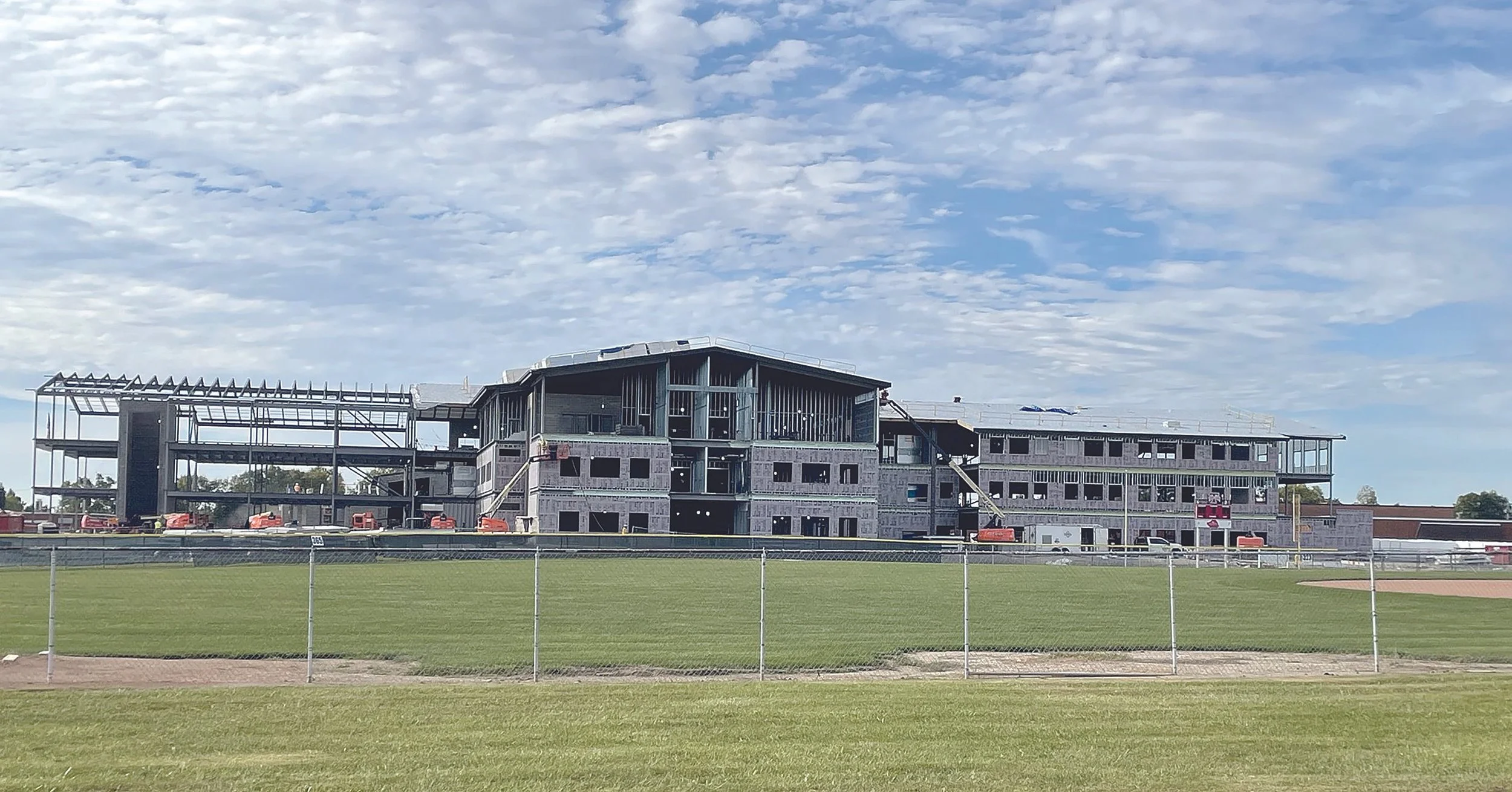
The next attempt was a bond issue for $87 million placed on the ballot in March 2024, with about 30% coming from the OFCC. The plan this time was to construct a new PK-8 building on the Hyatt Street campus between L.T. Ball Intermediate School and Tippecanoe Middle School. The turnout for the election was about 40% of the registered voters, indicating a significant level of participation. This time, the issue passed by a percentage similar to the last issue but in reverse: 53% for and 47% against. The targeted completion date for the new building is set for the end of 2027.
Perhaps the most remarkable part of the story of schools in Tipp City is its continuity. From its beginnings in a one-room log school in Hyattsville with only a few students in 1832 to a district with more than 2,300 students in the fall of 2026, the schools have been a vital part of our community. We pride ourselves on a system whose students and their families treasure the years spent in our great schools.
About the authors: Mike Jackson is a fourth-generation Tipp City resident who served on the Tipp City School Board from 1994-2001. Karen is a retired 36-year educator who taught in Tipp City schools for 22 years.
We acknowledge and thank the Tippecanoe Historical Society, The Tipp City Public Library, the Tipp City Herald, and the Tipp City Schools for the information used in this series.
Interested in becoming a Site Sponsor? Your ad will run at the bottom of EVERY NEWS STORY. Click HERE for more details.